The Verbal Yes Is Not a Signature: Inside the Deals That Agree Themselves to Death
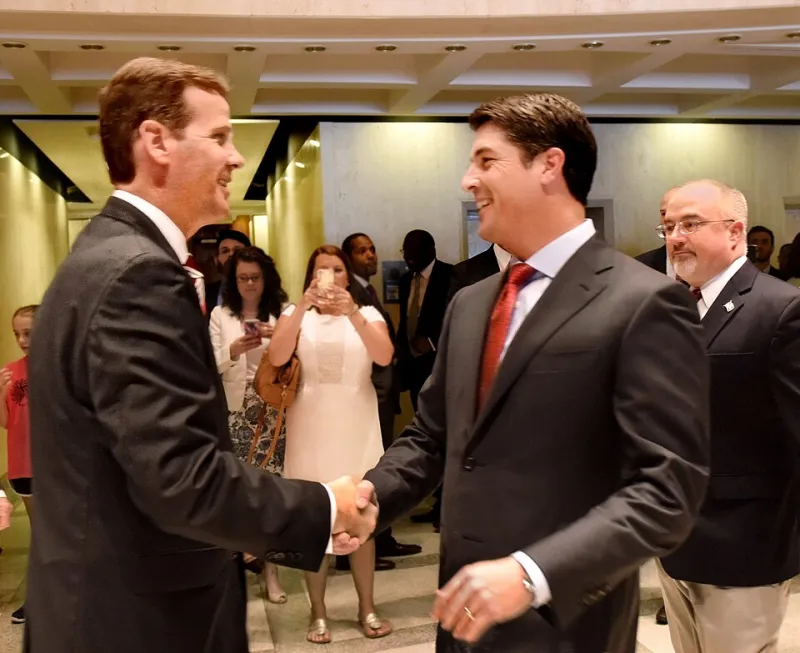
Photo: Florida House of Representatives, Public domain, via Wikimedia Commons
Every seasoned seller has lived this deal. The prospect is warm. The calls run long. They laugh at your jokes, praise the proposal, and use phrases like "this is exactly what we've been looking for." And then the quarter ends, the contract sits unsigned, and the opportunity you forecast in red ink quietly slides into next month. Again.
This is the two-close problem: the buyer who agrees verbally, repeatedly, and sincerely — and never commits on paper. It deserves closer examination than it usually gets, because the pattern is not dishonesty. It is something more instructive.
Why the Spoken Yes Feels So Different to the Buyer
Verbal agreement is cheap. It costs the buyer nothing, carries no risk, and requires no internal political capital. When your contact says "yes, let's do this" on a call, they are expressing genuine intent in the only currency that costs them nothing. The written commitment — the signature, the procurement review, the budget allocation — is where intent becomes exposure. At that moment, your champion must defend the purchase to colleagues, absorb the risk if it goes wrong, and spend influence they may not have.
The verbal yes, in other words, is often an emotional verdict. The signature is a political act. Sellers who treat the first as proof of the second consistently over-forecast and under-deliver.
The Three Faces of the Perpetual Yes
In most pipelines, the deal that agrees but never signs takes one of three shapes.
The Champion Without a Ladder. Your contact believes in the solution but lacks the standing to push it through. Every yes is real; every yes is also powerless. They will keep meeting with you because they genuinely want this to happen — and they will keep failing to make it happen because the internal case was never built.
The Consensus Collector. In mid-market and enterprise environments across the US, few decisions are made by one person. The buyer who keeps saying yes may simply be gathering approvals one conversation at a time, and the process has more rooms in it than you've been told about.
The Comfortable Deferrer. Some buyers say yes because agreement keeps a pleasant relationship alive without forcing a decision. The status quo, however imperfect, is working well enough. Their enthusiasm is authentic; their urgency is not.
Distinguishing among these three requires looking at behavior, not language. Words say yes. Calendars and paper trails tell the truth.
A Framework for Re-Engaging the Almost-Closed Deal
When you identify a deal stuck in the yes-but cycle, resist the instinct to push harder on enthusiasm. Enthusiasm is not the missing ingredient. Structure is. The following sequence has proven reliable:
1. Name the gap without accusation. "You've shared that this is a priority, and I believe you. Help me understand what's happening between the agreement and the signature." This reframes the conversation around process rather than commitment.
2. Ask for a dated, mutual close plan. Not a verbal timeline — a shared document with the buyer's name on specific steps. Who signs, who reviews legal, what procurement requires, and by when. A buyer who co-authors this plan is converting intent into commitment. A buyer who dodges it is telling you something you needed to know.
3. Elevate or exit. If your contact cannot produce a close plan, the deal almost certainly needs a decision-maker you haven't met. Request a working session with whoever owns the budget. If your champion cannot or will not arrange it, you have learned the deal's true state at the cost of one uncomfortable ask — far cheaper than another quarter of friendly calls.
4. Set a real deadline and hold it. Give the deal a sunset date. If the mutual plan cannot be completed by that date, close it as lost — respectfully, with the door open. This is the hardest step for most sellers, and the most valuable. A pipeline that contains no dead deals is a pipeline that contains no honest ones.
Forecasting the Truth
The two-close problem distorts more than individual opportunities; it corrupts the entire forecast. Leadership plans headcount, inventory, and cash against a number inflated by deals that were never real commitments. Teams learn, implicitly, that verbal enthusiasm counts as progress, and coaching conversations drift toward optimism management rather than execution.
The discipline that fixes it is cultural, not tactical. Reward sellers for advancing written commitment, not for collecting warm agreement. Review stuck deals in pipeline meetings by asking one question: what paper has changed hands? If the answer is none, the deal is not closing — regardless of how the last call ended.
The buyers who say yes twice are not the enemy. They are, more often than not, decent people trapped in processes they don't fully control. Your job is not to doubt their sincerity. It is to convert sincerity into signature — or to have the professional discipline to stop counting it as revenue.