Trained to Wait: The Slow Education Your Buyers Received at the Hands of Your Discounts
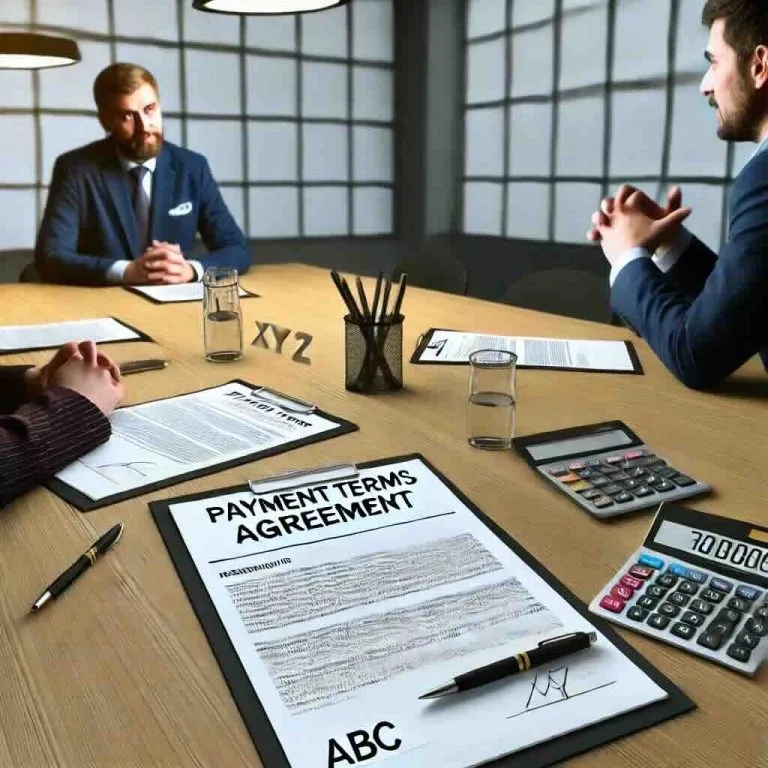
Photo: salesperson negotiating price across desk with calculator and contract, via usercontent.one
Somewhere in your organization right now, a deal is stalling for a reason nobody wants to say out loud. The buyer likes the product. The champion is engaged. The timeline was real three weeks ago. And yet nothing moves — because the buyer has learned, through years of careful instruction from sellers exactly like you, that waiting produces a better number.
Your team taught them that. Not with a seminar or a slide deck, but with a pattern: the end-of-quarter fire sale, the 'special pricing just for you,' the unrequested ten percent that appears the moment a deal wobbles. Each one was a small kindness. Together, they were a curriculum.
The Habit Loop Hiding in Your Deal Desk
Discounting behaves like any habit loop. A trigger — quarter-end pressure, a competitor's mention, a stalled email thread. A routine — the rep cuts price to force motion. A reward — the deal closes, the number gets reported, the anxiety subsides.
The buyer runs the mirror-image loop. Trigger: the seller gets eager. Routine: express hesitation, go quiet, mention 'another option we're evaluating.' Reward: a discount arrives within days, guaranteed by history.
Neither side is acting irrationally. Both are responding to incentives your own behavior created. The trouble is that the loop compounds. A buyer who once waited a week for a price break now waits a month. A rep who once discounted under pressure now discounts preemptively, building the concession into the first quote 'to be competitive.' What began as an exception hardens into an expectation, and expectations travel fast through procurement teams, peer networks, and LinkedIn groups where buyers compare notes with remarkable candor.
What the Pattern Is Really Costing
The visible cost is margin. The invisible costs are worse.
First, discounting on demand destroys the information value of your pipeline. A deal that only moves when the price drops was never a deal — it was a negotiation rehearsal. Your forecast inflates with opportunities whose only real momentum is your own eagerness.
Second, the reflex repositions your entire value proposition. If your price is negotiable, so, implicitly, is your quality. Buyers don't say this aloud, but they act on it: they de-prioritize your differentiators and negotiate as though every vendor on the shortlist were interchangeable. In a sense, your discounting made them true.
Third — and this is the part that keeps sales leaders up at night — the reflex migrates up the organization. Procurement teams institutionalize it. 'They always come down at quarter end' becomes a documented playbook on the buyer's side, while your side has no playbook at all beyond panic and a calculator.
Rebuilding Price Integrity Without Freezing the Funnel
The answer is not to ban discounts. Discounting, deployed deliberately, is a legitimate instrument. The problem is reflexive, unpriced, unconditional discounting. The fix is a framework with three rules.
Rule one: no discount without a trade. Every concession must purchase something — a signature by a date, a multi-year commitment, a case study, an executive sponsor, a larger initial order. This single rule converts discounting from a retreat into an exchange, and buyers respect exchanges. It also gives your reps a script that preserves the relationship: 'I can look at the investment level, and here's what I'd need from your side to make that work.'
Rule two: no discount without a diagnosis. Before anyone touches price, the rep must answer a question in writing: what is actually blocking this deal? Nine times out of ten, the obstacle is risk, not budget — an unconvinced stakeholder, an unclear implementation path, a fear of making the wrong call. A price cut does not resolve any of those. It merely masks them until next quarter, when they resurface with the price already reduced.
Rule three: no discount without a calendar. Concessions expire. A 'special' price that sits on the table indefinitely is not special; it is your new list price. Time-boxed offers restore urgency honestly, because the deadline is real and mutual rather than manufactured.
Retraining the Market, One Quarter at a Time
Buyers learned to wait; buyers can learn to move. But the retraining happens through consistency, not announcements. The first quarter you hold price, some deals will die — the ones that were never real. Let them. What replaces them, over two or three quarters, is a pipeline with sturdier bones: opportunities that advance on value, close on time, and pay the price your product actually deserves.
Your reps will need support. Compensate margin quality, not just revenue. Review discount requests in the same weekly meeting where you review pipeline, so discipline stays visible. Celebrate the full-price win with the same energy as the biggest logo.
The market is not asking you to be cheaper. It is asking you to be predictable. Give it a seller whose price means something, and the waiting stops — because there is nothing left to wait for.